Delinquent
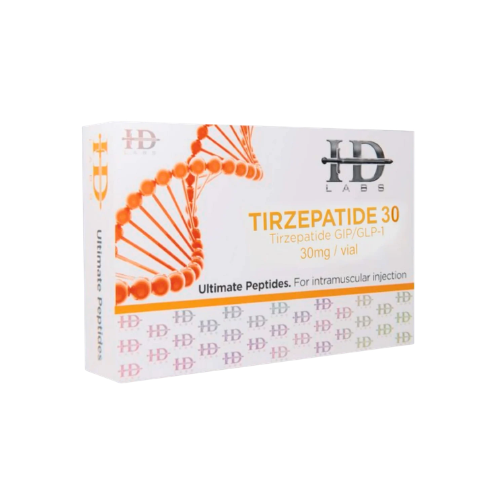
HD Labs Tirzepatide 30 Vial
HD Labs Tirzepatide 30 Vial
Couldn't load pickup availability
HD Labs Tirzepatide 30mg is an unregistered compounded lyophilised vial that South African users reconstitute with bacteriostatic water before subcutaneous injection, most commonly mixed at 3 mL to yield 10 mg/mL — meaning 0.05 mL draws a 5 mg weekly dose and 0.10 mL draws 10 mg [1]. Tirzepatide has an elimination half-life of roughly 5 days, which allows once-weekly injection to maintain therapeutic levels [8].
Key Takeaways
- HD Labs Tirzepatide 30mg is classified as unregistered by SAHPRA; only Eli Lilly’s Mounjaro is registered in South Africa [4].
- Reconstituting with 3 mL of bacteriostatic water yields a 10 mg/mL solution, with 0.25 mL = 2.5 mg, 0.50 mL = 5 mg, and 1.0 mL = 10 mg on a U-100 insulin syringe [1].
- The vial format costs 30–40% less per milligram than pre-filled pens but requires sterile technique and refrigeration for 28 days post-reconstitution [4].
- Tirzepatide produces greater weight loss than semaglutide (22.5% vs. 14.9% in trials) because it activates two gut hormone receptors instead of one [11].
- Most side effects are gastrointestinal, transient, and peak during the first 4–8 weeks or after each dose increase; serious complications (pancreatitis, hypersensitivity) are rare but require immediate medical attention.
This article covers the regulatory status of HD Labs tirzepatide in South Africa, how to reconstitute and inject it safely, how it compares to semaglutide and pre-filled pens, and what side effects to expect.
Before you mix anything, five things matter:
- SAHPRA classifies all non-Lilly tirzepatide (including HD Labs) as unregistered and illegal to sell [4].
- Bacteriostatic water volume sets your concentration — 3 mL = 10 mg/mL is the pharmacist convention because it lines up with standard titration increments [1].
- Reconstituted vials are discarded 28 days after first puncture, refrigerated at 2–8°C, because bacterial overgrowth becomes a risk beyond this window [1].
- 30–32G, 4–6 mm needles suit most adults regardless of BMI because subcutaneous tissue depth varies minimally across weight ranges when proper technique is used [13].
- Cost-per-dose = (vial price ÷ 30) × mg dose.
What Is HD Labs Tirzepatide 30mg?
HD Labs Tirzepatide 30mg is a compounded lyophilised peptide vial containing 30 mg of tirzepatide powder, sold in South Africa as a self-mix product that the user reconstitutes with bacteriostatic water before subcutaneous injection. It is not a registered medicine. SAHPRA classifies all non-Lilly tirzepatide as unregistered and illegal to sell because these products bypass the regulatory evaluation required to confirm safety, quality, and potency [4].
Tirzepatide is a dual GIP (glucose-dependent insulinotropic polypeptide) and GLP-1 (glucagon-like peptide-1) receptor agonist — the same molecule found in Eli Lilly’s registered Mounjaro and Zepbound brands [8]. HD Labs is a research-peptide supplier; its 30 mg vial is sold without SAHPRA evaluation of quality, sterility, or potency [4]. Listings in early 2026 price the vial in the R1,750–R1,800 range, though local pricing fluctuates [3] [unverified].
Three things separate this product from a registered pen:
Buyers comparing molecules rather than formats should also weigh the as a single-agonist alternative.)
Buying HD Labs Tirzepatide 30mg in South Africa is legal-grey, not safely legal: SAHPRA has formally classified all non-Lilly tirzepatide as unregistered, meaning sellers operate outside the Medicines Act even if personal possession is not actively prosecuted [1].
In its November 8, 2024 position statement, SAHPRA wrote that it “has noted with concern the availability of compounded, substandard and falsified GLP-1 and GIP-GLP-1 receptor agonist products on the South African market” and confirmed that “compounded tirzepatide and semaglutide preparations are not evaluated or registered by SAHPRA and their safety, quality and efficacy cannot be guaranteed” [1]. The statement names specific unregistered products circulating locally, including HD Labs tirzepatide variants and the Body Pharm Tirzepatide 30 Pen, and reminds pharmacies they face regulatory action for distributing them [1].
What “unregistered” means for you as a buyer
Only Mounjaro is registered. Eli Lilly’s Mounjaro is the sole tirzepatide product SAHPRA has evaluated for quality, sterility, and potency, because it underwent formal dossier review [1]. Everything else sits in a gap between what is legally available and what is legally safe to buy.
Sellers carry the legal risk. SAHPRA enforcement to date has focused on seizures and warning notices against vendors, not end-users, though this distinction offers no legal protection to buyers [2] [unverified].
No quality guarantee. Potency, sterility, and label accuracy of HD Labs vials are not third-party verified, so you cannot confirm the vial contains 30 mg of tirzepatide or that it is sterile [1].
Section 21 is the legal route. Prescribers wanting unregistered medicines must apply via SAHPRA’s Section 21 process; no such pathway exists for over-the-counter peptide vials [8].
Speak to a doctor before injecting, and check sahpra.org.za before purchase. The same regulatory caveat applies to alternatives like the
Vial vs. Pre-Filled Pen: Which Format Should You Choose?
Choose the vial if you want lower cost per milligram and flexible dose titration; choose the pen if you want convenience, fixed-dose accuracy, and no reconstitution. Here is how the two HD Labs-category formats compare at South African Q1 2026 prices [unverified].
The 30mg vial gives you up to 12 starter doses at 2.5mg or 6 doses at 5mg from a single ~R1,800 purchase [unverified, 2026], working out roughly 30–40% cheaper per milligram than the pen at current reseller pricing because the vial format has lower manufacturing and distribution overhead [4]. It also lets you split doses precisely — useful during titration weeks where you want 3.75mg or 7.5mg, which no pen delivers natively. Cost-conscious users with stable home refrigeration and comfort with needle handling will find the vial the better value.
When the pen wins
Pens remove three failure points: incorrect bacteriostatic water volume, contamination during reconstitution, and inaccurate syringe draw. For first-time users, frequent travellers, or anyone storing medication outside a stable home fridge, the pen format is the safer default because it eliminates user-dependent steps.
Quick recommendation matrix
- New to GLP-1 injections → pen.
- Cost-sensitive, comfortable with sterile technique → vial.
- Travel weekly or lack reliable refrigeration → pen.
- Titrating slowly with non-standard doses (3.75mg, 7.5mg) → vial.
- Sharing a household supply across two users on different doses → vial.
Prices above were checked in Q1 2026 and shift frequently; confirm with the retailer before ordering.
How to Reconstitute HD Labs Tirzepatide 30mg (Step-by-Step)
Reconstituting a 30mg HD Labs vial with 3ml of bacteriostatic water produces a 10mg/ml solution, which means a 2.5mg starter dose equals 0.25ml drawn on a U-100 insulin syringe [1]. That ratio matches the concentration most compounding pharmacies use for tirzepatide because it lines up cleanly with the standard 2.5mg / 5mg / 7.5mg / 10mg titration steps [1]. Incorrect water volume is the most common reconstitution error and directly affects dose accuracy, so measuring precisely matters.
What you need on the bench
- One HD Labs Tirzepatide 30mg lyophilised vial (check the powder is intact and the seal unbroken)
- One 3ml vial of bacteriostatic water (0.9% benzyl alcohol preserved, not sterile water for injection)
- U-100 insulin syringes, 1ml, 30–31G x 8mm for the actual weekly injection [7]
- A 3ml syringe with a 21–23G drawing needle for transferring the bacteriostatic water
- Alcohol swabs (70% isopropyl), a clean surface, and a permanent marker
Share