Delinquent
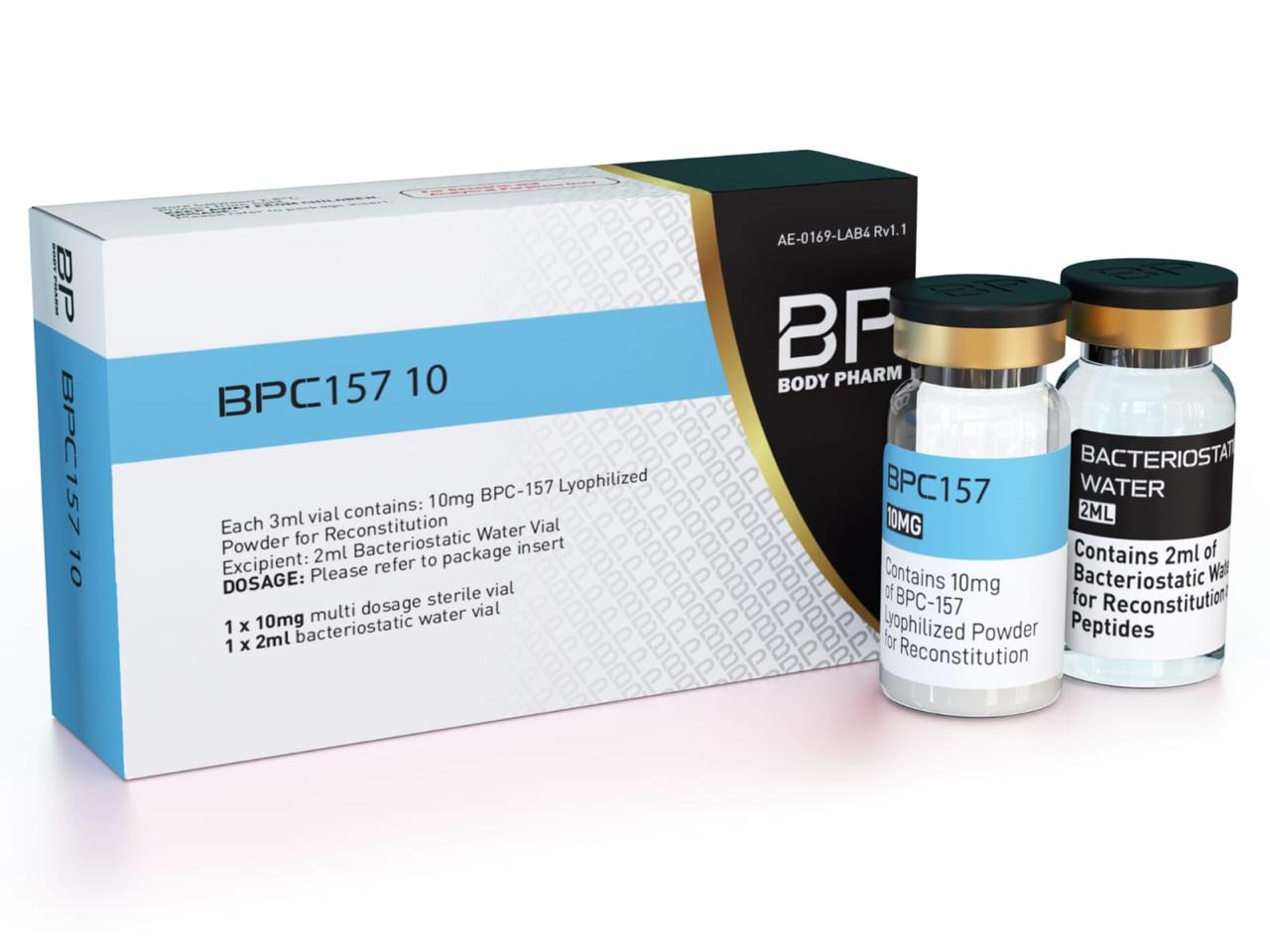
Body Pharm BPC157 10 mg Vial
Body Pharm BPC157 10 mg Vial
Couldn't load pickup availability
Body Pharm BPC-157 10mg is a lyophilised research-grade pentadecapeptide vial sold in South Africa for in vitro and preclinical tissue-repair studies, not for human or veterinary use under SAHPRA's unregistered-medicines framework.
South African researchers should check three things before ordering: batch-specific HPLC documentation (typically ≥98% for research-grade material, with Certificate of Analysis provided on request); salt form (acetate, arginine salt, or free acid, confirm with the supplier); and ZAR pricing. The 5mg Body Pharm vial was listed at R391 in 2024, so the 10mg vial typically costs roughly double.
As of May 2026, no completed human clinical trial of BPC-157 is registered on ClinicalTrials.gov or SANCTR (South African National Clinical Trials Register). All efficacy claims below apply strictly to preclinical models.
Key Takeaways
- BPC-157 is a 15-amino-acid research peptide (CAS 137525-51-0) with no registered human clinical trials in South Africa or globally as of May 2026
- Preclinical rodent studies report tissue-repair benefits in tendon, ligament and gastric mucosa, but no human efficacy data exists
- Research-grade purity should be ≥98% HPLC; request batch-specific Certificates of Analysis before use
- The 10mg vial costs roughly double the 5mg format (estimated R780–R850) and reduces per-assay cost for multi-arm protocols
- Sourcing locally avoids import delays, SARS clearance and cold-chain breaks
- Institutional ethics clearance and biosafety sign-off are mandatory before any laboratory work
What Is BPC-157? A Research-Chemical Overview
BPC-157 is a synthetic pentadecapeptide of 15 amino acids (sequence GEPPPGKPADDAGLV), derived from a partial sequence identified in human gastric juice. It has been studied since the early 1990s as a cytoprotective fragment of Body Protection Compound. The peptide carries CAS number 137525-51-0, molecular formula C62H98N16O22, and molecular weight 1,419.53 g/mol. It is a research chemical, not a licensed medicine in South Africa.
Naming and identity
The peptide appears in the preclinical literature as Body Protection Compound 157, PL-10, PL 14736, or "pentadecapeptide BPC 157". Sikiric and colleagues have published the bulk of rodent tissue-repair and brain-gut axis work since 2016. South African laboratory orders should match CAS number 137525-51-0 against the supplier's batch documentation to confirm identity before reconstitution.
Regulatory status
No human medicine containing BPC-157 is registered with SAHPRA (South African Health Products Regulatory Authority). No completed human clinical trial appears on ClinicalTrials.gov or SANCTR as of May 2026. Material sold through the peptides catalogue is supplied strictly for in vitro and preclinical use, in line with the unregistered-substances framework under the Medicines and Related Substances Act.
Researchers comparing tissue-repair candidates often benchmark BPC-157 against the copper tripeptide GHK-Cu in parallel wound-healing assays.
Body Pharm BPC-157 10mg, Product Specifications
The Body Pharm BPC-157 10mg vial is a lyophilised pentadecapeptide powder for in vitro and preclinical research, containing 10mg of net peptide for reconstitution. The 10mg format roughly doubles the working stock per vial compared with the more widely listed 5mg format, which lowers per-assay cost for researchers running multi-arm tissue-repair protocols.
| Specification | Value |
|---|---|
| Manufacturer | Body Pharm |
| Form | Lyophilised powder |
| Vial size | 10mg net peptide |
| Peptide sequence | Gly-Glu-Pro-Pro-Pro-Gly-Lys-Pro-Ala-Asp-Asp-Ala-Gly-Leu-Val |
| Purity (typical research grade) | ≥98% HPLC (request batch CoA) |
| Salt form | Not specified on vendor listing; confirm with supplier |
| Reconstitution solvent | Bacteriostatic water |
| Storage (sealed) | −20 °C, protected from light |
| Storage (reconstituted) | 2–8 °C, use within 30 days |
| Intended use | In vitro / preclinical research only |
Body Pharm's South African listings for the 5mg sibling product do not publish a batch-specific HPLC chromatogram on the product page. I request the current Certificate of Analysis from the supplier before each new experimental series and match CAS number 137525-51-0 against the documentation at goods-receipt. This confirms both identity and purity before any reconstitution begins.
Researchers building a broader tissue-repair panel can cross-reference this vial against the rest of the peptides catalogue, including the Body Pharm GHK-Cu research peptide used in parallel wound-healing assays.
BPC-157 in Tissue-Repair Research: Key Preclinical Findings
The BPC-157 evidence base is preclinical. Rodent and in vitro studies from roughly 2010 to 2023 report accelerated tendon, ligament, gastric mucosal and bone healing. The proposed mechanism centres on VEGF (Vascular Endothelial Growth Factor)-driven angiogenesis and upregulation of growth hormone receptor expression in injured tissue.
No Phase III human clinical trial of BPC-157 has been registered or completed on ClinicalTrials.gov or the South African National Clinical Trials Register as of May 2026. Every claim below applies to animal or cell-culture models only. This is standard for early-stage research peptides and does not preclude mechanistic or comparative in vitro work.
Share